
Introduction
Chronic pain can affect every part of daily life from mobility and sleep to work and overall well-being. For many individuals in St. Louis, Missouri, finding a solution that does not involve surgery, long recovery times, or heavy medication is a top priority. This is where SoftWave Therapy is changing the way pain is managed.
At Smart Pain Solutions, patients have access to advanced, non-invasive technologies designed to support the body’s natural healing processes. SoftWave Therapy is one of the most innovative options available today for individuals seeking relief from musculoskeletal pain and soft tissue injuries.
This article explores how SoftWave Therapy works, what to expect during treatment, and why it has become a trusted option for pain relief in St. Louis.
What Is SoftWave Therapy?
SoftWave Therapy is a non-invasive treatment that uses advanced acoustic wave technology to stimulate the body’s natural healing response. Unlike traditional shockwave therapy, SoftWave technology is designed to be more comfortable while still delivering powerful regenerative effects.
The treatment works by sending acoustic waves into injured or inflamed tissues. These waves help increase blood flow, activate cellular repair, and support soft tissue regeneration. Over time, this can help reduce pain and improve mobility.
SoftWave Therapy is commonly used as a non-invasive pain treatment for conditions affecting muscles, tendons, ligaments, and joints.
How SoftWave Therapy Works
SoftWave Therapy uses electrohydraulic supersonic acoustic waves that penetrate deep into damaged tissue. These waves create a biological response in the body that encourages healing at the cellular level.
Key effects include:
- Increased circulation to injured areas
- Activation of stem cells and repair mechanisms
- Reduction of inflammation
- Breakdown of scar tissue
- Improved tissue regeneration
Unlike surgical procedures, there is no downtime, incisions, or medication required. Patients typically resume normal activities immediately after treatment.
What to Expect During a SoftWave Therapy Treatment
Patients receiving SoftWave therapy treatment at Smart Pain Solutions in St. Louis can expect a straightforward and comfortable experience. A typical session includes:
- Initial Evaluation — A provider evaluates the patient’s condition, pain level, and medical history to determine if SoftWave Therapy is appropriate.
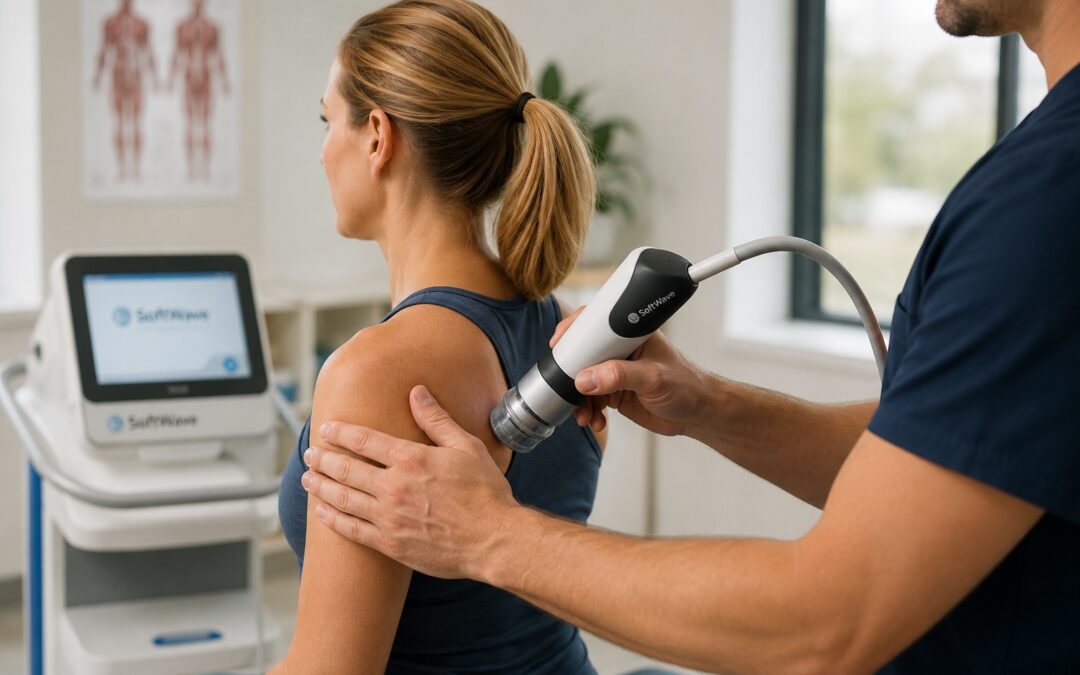
- Treatment Application — A provider places a handheld device similar looking to an ultrasound wand on the affected area. Acoustic waves are delivered through the skin to target damaged tissues.
- Sensation During Treatment — Most patients describe the sensation as a tapping or pulsing feeling. The intensity can be adjusted for comfort.
- Post-Treatment Response — There is no downtime. Some patients may feel immediate relief, while others notice gradual improvement over several sessions.
Benefits of SoftWave Therapy
SoftWave Therapy offers a wide range of potential benefits for individuals dealing with chronic or acute pain conditions.
- Natural Pain Relief Support — Many patients seek SoftWave therapy for pain as an alternative to medications or invasive procedures.
- Supports Tissue Regeneration — The therapy promotes SoftWave tissue regeneration, helping the body repair damaged structures naturally.
- Non-Invasive and Drug-Free — As a non-invasive pain treatment, it avoids the risks associated with surgery or long-term medication use.
- Improved Mobility — By reducing inflammation and improving tissue health, patients often experience better movement and flexibility.
- Versatile Treatment Option — SoftWave Therapy may be used for a variety of conditions, including joint pain, tendon injuries, muscle strains, and chronic inflammation.
Who May Benefit from SoftWave Therapy?
SoftWave Therapy may be appropriate for individuals experiencing:
- Chronic back or neck pain
- Shoulder or knee pain
- Sports injuries
- Tendinitis or plantar fasciitis
- Joint stiffness or inflammation
- Soft tissue injuries
It is often considered by patients who have not found relief through traditional methods or who want to avoid surgery. A consultation at Smart Pain Solutions can help determine whether this treatment is the right fit for your condition.
SoftWave Therapy in St. Louis: A Local Solution for Pain Relief
Residents of St. Louis, Missouri, now have access to advanced regenerative care without needing to travel far. At Smart Pain Solutions, SoftWave Therapy is part of a comprehensive approach to pain management focused on long-term wellness and function.
Whether you are recovering from an injury or managing chronic discomfort, SoftWave Therapy in St. Louis offers a modern option designed to support healing from within.
Why Choose Smart Pain Solutions?
Smart Pain Solutions focuses on patient-centered care and innovative treatment options that prioritize long-term results over temporary fixes. Patients choose Smart Pain Solutions because they offer:
- Advanced regenerative treatment options
- Personalized care plans
- Non-surgical pain management solutions
- A focus on restoring function and mobility
To explore additional services, patients can learn more about our pain treatment options or explore our regenerative treatment services available through the clinic. For those ready to take the next step, you can also schedule a consultation with Smart Pain Solutions to determine the best treatment plan for your needs.
What Makes SoftWave Therapy Different?
Unlike traditional approaches that may only mask symptoms, SoftWave Therapy focuses on addressing the underlying cause of pain. By stimulating the body’s natural repair systems, it supports long-term improvement rather than temporary relief.
This makes it a valuable option for individuals seeking a more holistic and regenerative approach to healing.
Frequently Asked Questions
Most mild to moderate whiplash injuries improve within a few weeks with active treatment. Cases involving nerve irritation or disc injury can take longer and benefit from a structured, individualized recovery plan.
Yes. Inflammation in the injured tissue can take 12 to 72 hours to fully develop, so it’s common for pain, stiffness, or headaches to appear a day or two after the initial impact.
Yes. Whiplash primarily affects soft tissue such as muscles, ligaments, and tendons, which don’t show up on a standard X-ray. A normal X-ray rules out fractures but doesn’t rule out whiplash.
Untreated whiplash can develop into chronic neck pain, defined as pain lasting beyond three months. Without proper care, stiffness and muscle weakness can set in, making the injury harder to resolve and increasing the risk of long-term limited range of motion.
Not always. An MRI is typically recommended only when symptoms suggest nerve compression or disc injury, such as tingling or numbness radiating into the arms, or when pain doesn’t improve with initial treatment.
Yes. Headaches, especially at the base of the skull, along with dizziness and balance problems, are common whiplash symptoms caused by strain on the cervical spine and surrounding nerves.
There is no single best treatment; effective care typically combines early mobilization, chiropractic adjustments, and/or physical therapy. At Smart Pain Solutions in St. Louis, Missouri, we use soft-tissue massage, chiropractic adjustments, guided rehab, and Softwave Therapy, a type of shockwave treatment.
As soon as possible, even if symptoms seem mild at first. Inflammation can take 12 to 72 hours to fully develop, and early evaluation reduces the risk of the injury becoming chronic.